Buy abcmovies.eu ?
We are moving the project
abcmovies.eu .
Are you interested in purchasing the domain
abcmovies.eu ?
domain@kv-gmbh.de · 0541-91531010
Buy abcmovies.eu ?
How can energy be fed into a decentralized heat pump?
Energy can be fed into a decentralized heat pump through various sources such as electricity, solar power, or geothermal energy. The heat pump uses this energy to extract heat from the surrounding environment and transfer it into a building for heating purposes. In the case of electricity, it can be sourced from renewable sources to ensure a more sustainable and environmentally friendly operation of the heat pump. Additionally, decentralized heat pumps can also be integrated with smart grid systems to optimize energy usage and reduce overall energy consumption. **
Is the heat pump really the energy of the future?
The heat pump is considered to be a promising technology for the future of energy. It is an efficient and environmentally friendly way to heat and cool buildings, as it uses renewable energy sources such as the air, ground, or water. Heat pumps also have the potential to reduce greenhouse gas emissions and decrease reliance on fossil fuels. However, there are still challenges to overcome, such as high upfront costs and the need for infrastructure improvements. Overall, while the heat pump shows great potential, it will likely be part of a mix of technologies that will shape the future of energy. **

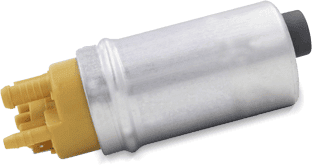
Similar search terms for ENERGY-G10005-Petrol-pump
Top-Angebote
Products related to ENERGY-G10005-Petrol-pump:
-
ENERGY G10029 Petrol pumpVoltage [V]: 12; Fitting Position: in the fuel tank; Diameter: 50; Operating Mode: Electric; Flow rate [l/h]: 85; Injection System: Multi Point Injection (MPI); Weight [kg]: 0,68; Diameter 1 [mm]: 8; Operating Pressure [bar]: 3; Number of inlets/outlets: 1/1; Length 1 [mm]: 99; Length 2 [mm]: 136; Always compare old and new part (in particular OE No.): ; TecDoc Engine Number: 11354, 15629, 5075, 12488, 12509, 16135, 16199, 15485, 15486, 9456, 16526, 17352; Construction Year from: 05/1998, 07/1997, 11/1998; Vehicle Identification Number (VIN) from: 1-016001, 1 023 001; Vehicle Identification Number (VIN) to: 1-070000, 1-070001, 1 070 000, 1-016000; Construction Year to: 05/2002, 07/2004, 07/2002, 11/200632,99 £*Shipping: 8,45 £Secure redirect to the provider
-
ENERGY G20031 Petrol pumpVoltage [V]: 12; Fitting Position: Fuel Line; Diameter: 43; Operating Mode: Electric; Flow rate [l/h]: 95; Injection System: Multi Point Injection (MPI); Weight [kg]: 0,55; Diameter 1 [mm]: 9; Diameter 2 [mm]: 12; Operating Pressure [bar]: 3; Number of inlets/outlets: 1/1; Length 1 [mm]: 110; Length 2 [mm]: 170; Always compare old and new part (in particular OE No.): ; TecDoc Engine Number: 93, 120, 110, 2864; Construction Year from: 09/1991, 07/1989, 07/1990, 06/1990; Construction Year to: 03/1992, 04/1988, 09/1990, 12/199231,99 £*Shipping: 8,45 £Secure redirect to the provider
-
ENERGY G30042 Petrol pumpVoltage [V]: 12; Fitting Position: in the fuel tank; Operating Mode: Electric; Fuel Type: Petrol; Weight [kg]: 0,63; Always compare old and new part (in particular OE No.): ; Construction Year from: 08/1996; Construction Year to: 10/199629,49 £*Shipping: 8,45 £Secure redirect to the provider


-
Can a drilling machine pump be powered by wind energy?
Yes, a drilling machine pump can be powered by wind energy. This can be achieved by using a wind turbine to generate electricity, which can then be used to power the drilling machine pump. The wind turbine converts the kinetic energy of the wind into mechanical power, which is then converted into electrical power to operate the drilling machine pump. This is a sustainable and environmentally friendly way to power the drilling machine pump, as it relies on renewable wind energy. **
-
'Petrol or premium?'
The choice between petrol and premium fuel depends on your vehicle's engine requirements. Premium fuel typically has a higher octane rating, which can provide better performance and fuel efficiency for high-performance or turbocharged engines. However, if your vehicle's manufacturer recommends regular petrol, using premium fuel may not provide any additional benefits and could be a waste of money. It's best to refer to your vehicle's owner's manual to determine the appropriate fuel type for your car. **
-
How is the energy conversion carried out in a heat pump?
In a heat pump, energy conversion is carried out through the use of a refrigerant. The heat pump uses electricity to drive a compressor, which increases the pressure and temperature of the refrigerant. The hot, high-pressure refrigerant then flows through a condenser, where it releases heat to the surrounding air or water. The now-cooled refrigerant then passes through an expansion valve, which reduces its pressure and temperature. This low-pressure, cool refrigerant then absorbs heat from the outside air or ground as it passes through the evaporator, and the cycle repeats. This process allows the heat pump to transfer heat from a low-temperature source to a high-temperature space, providing heating or cooling as needed. **
-
How can I calculate the time and energy of the pump?
To calculate the time and energy of the pump, you can use the formula: Energy (in kilowatt-hours) = Power (in kilowatts) x Time (in hours). First, determine the power of the pump by multiplying the voltage by the current. Then, measure the time the pump is in operation. Finally, use the formula to calculate the energy consumption of the pump. This will give you the amount of energy used by the pump over a specific period of time. **


Petrol or diesel car?
The choice between a petrol or diesel car depends on individual preferences and driving habits. Petrol cars are generally cheaper to purchase and maintain, while diesel cars are more fuel-efficient and have better torque for towing. However, diesel cars tend to have higher initial costs and can be more expensive to service. Ultimately, it is important to consider factors such as fuel efficiency, maintenance costs, and intended use when deciding between a petrol or diesel car. **
Petrol: Regular or Premium?
The choice between regular and premium petrol depends on the specific requirements of your vehicle. Regular petrol is suitable for most vehicles and provides adequate performance. However, if your vehicle's engine is designed for higher performance or has a higher compression ratio, premium petrol may be recommended to prevent knocking and improve overall engine performance. It's important to consult your vehicle's manual or a professional to determine the best type of petrol for your specific vehicle. **
Top-Angebote
Products related to ENERGY-G10005-Petrol-pump:
-
ENERGY G10005 Petrol pumpVoltage [V]: 12; Fitting Position: in the fuel tank; Diameter: 36; Operating Mode: Electric; Flow rate [l/h]: 90; Injection System: Multi Point Injection (MPI); Supplementary Article / Supplementary Info Info 2: with filter; Weight [kg]: 0,32; Diameter 1 [mm]: 6; Diameter 2 [mm]: 10; Operating Pressure [bar]: 3; Number of inlets/outlets: 2/1; Length 1 [mm]: 65; Length 2 [mm]: 175; Always compare old and new part (in particular OE No.): ; TecDoc Engine Number: 14730; Construction Year from: 05/1997, 10/1995, 02/1996, 06/2000, 03/1996, 01/2001, 03/1998, 09/1997, 06/1996, 03/1999, 02/2000, 10/2001; not for engine code: KDX (TU3MC), B 4184 S3; Construction Year to: 12/1998, 12/1997, 10/1999, 03/2003, 07/1999, 09/1999, 08/2001, 09/200117,99 £*Shipping: 8,45 £Secure redirect to the provider
-
ENERGY G10029 Petrol pumpVoltage [V]: 12; Fitting Position: in the fuel tank; Diameter: 50; Operating Mode: Electric; Flow rate [l/h]: 85; Injection System: Multi Point Injection (MPI); Weight [kg]: 0,68; Diameter 1 [mm]: 8; Operating Pressure [bar]: 3; Number of inlets/outlets: 1/1; Length 1 [mm]: 99; Length 2 [mm]: 136; Always compare old and new part (in particular OE No.): ; TecDoc Engine Number: 11354, 15629, 5075, 12488, 12509, 16135, 16199, 15485, 15486, 9456, 16526, 17352; Construction Year from: 05/1998, 07/1997, 11/1998; Vehicle Identification Number (VIN) from: 1-016001, 1 023 001; Vehicle Identification Number (VIN) to: 1-070000, 1-070001, 1 070 000, 1-016000; Construction Year to: 05/2002, 07/2004, 07/2002, 11/200632,99 £*Shipping: 8,45 £Secure redirect to the provider
-
ENERGY G20031 Petrol pumpVoltage [V]: 12; Fitting Position: Fuel Line; Diameter: 43; Operating Mode: Electric; Flow rate [l/h]: 95; Injection System: Multi Point Injection (MPI); Weight [kg]: 0,55; Diameter 1 [mm]: 9; Diameter 2 [mm]: 12; Operating Pressure [bar]: 3; Number of inlets/outlets: 1/1; Length 1 [mm]: 110; Length 2 [mm]: 170; Always compare old and new part (in particular OE No.): ; TecDoc Engine Number: 93, 120, 110, 2864; Construction Year from: 09/1991, 07/1989, 07/1990, 06/1990; Construction Year to: 03/1992, 04/1988, 09/1990, 12/199231,99 £*Shipping: 8,45 £Secure redirect to the provider
-
How can energy be fed into a decentralized heat pump?
Energy can be fed into a decentralized heat pump through various sources such as electricity, solar power, or geothermal energy. The heat pump uses this energy to extract heat from the surrounding environment and transfer it into a building for heating purposes. In the case of electricity, it can be sourced from renewable sources to ensure a more sustainable and environmentally friendly operation of the heat pump. Additionally, decentralized heat pumps can also be integrated with smart grid systems to optimize energy usage and reduce overall energy consumption. **
-
Is the heat pump really the energy of the future?
The heat pump is considered to be a promising technology for the future of energy. It is an efficient and environmentally friendly way to heat and cool buildings, as it uses renewable energy sources such as the air, ground, or water. Heat pumps also have the potential to reduce greenhouse gas emissions and decrease reliance on fossil fuels. However, there are still challenges to overcome, such as high upfront costs and the need for infrastructure improvements. Overall, while the heat pump shows great potential, it will likely be part of a mix of technologies that will shape the future of energy. **
-
Can a drilling machine pump be powered by wind energy?
Yes, a drilling machine pump can be powered by wind energy. This can be achieved by using a wind turbine to generate electricity, which can then be used to power the drilling machine pump. The wind turbine converts the kinetic energy of the wind into mechanical power, which is then converted into electrical power to operate the drilling machine pump. This is a sustainable and environmentally friendly way to power the drilling machine pump, as it relies on renewable wind energy. **
-
'Petrol or premium?'
The choice between petrol and premium fuel depends on your vehicle's engine requirements. Premium fuel typically has a higher octane rating, which can provide better performance and fuel efficiency for high-performance or turbocharged engines. However, if your vehicle's manufacturer recommends regular petrol, using premium fuel may not provide any additional benefits and could be a waste of money. It's best to refer to your vehicle's owner's manual to determine the appropriate fuel type for your car. **
Similar search terms for ENERGY-G10005-Petrol-pump
-
ENERGY G30042 Petrol pumpVoltage [V]: 12; Fitting Position: in the fuel tank; Operating Mode: Electric; Fuel Type: Petrol; Weight [kg]: 0,63; Always compare old and new part (in particular OE No.): ; Construction Year from: 08/1996; Construction Year to: 10/199629,49 £*Shipping: 8,45 £Secure redirect to the provider
-
ENERGY G10023 Petrol pumpVoltage [V]: 12; Fitting Position: in the fuel tank; Operating Mode: Electric; Flow rate [l/h]: 100; Injection System: Multi Point Injection (MPI); Supplementary Article / Supplementary Info Info 2: with filter; Weight [kg]: 0,99; Operating Pressure [bar]: 6,5; Number of inlets/outlets: 1/1; Always compare old and new part (in particular OE No.): ; Construction Year to: 07/1989, 12/1987; Construction Year from: 09/198559,99 £*Shipping: 8,45 £Secure redirect to the provider
-
ENERGY G10061 Petrol pumpVoltage [V]: 12; Fitting Position: in the fuel tank; Diameter: 43; Operating Mode: Electric; Flow rate [l/h]: 100; Injection System: Multi Point Injection (MPI); Supplementary Article / Supplementary Info Info 2: with filter; Weight [kg]: 0,56; Diameter 1 [mm]: 8; Diameter 2 [mm]: 12; Operating Pressure [bar]: 3,5; Number of inlets/outlets: 1/1; Length 1 [mm]: 97; Length 2 [mm]: 143; Always compare old and new part (in particular OE No.):35,99 £*Shipping: 8,45 £Secure redirect to the provider
-
How is the energy conversion carried out in a heat pump?
In a heat pump, energy conversion is carried out through the use of a refrigerant. The heat pump uses electricity to drive a compressor, which increases the pressure and temperature of the refrigerant. The hot, high-pressure refrigerant then flows through a condenser, where it releases heat to the surrounding air or water. The now-cooled refrigerant then passes through an expansion valve, which reduces its pressure and temperature. This low-pressure, cool refrigerant then absorbs heat from the outside air or ground as it passes through the evaporator, and the cycle repeats. This process allows the heat pump to transfer heat from a low-temperature source to a high-temperature space, providing heating or cooling as needed. **
-
How can I calculate the time and energy of the pump?
To calculate the time and energy of the pump, you can use the formula: Energy (in kilowatt-hours) = Power (in kilowatts) x Time (in hours). First, determine the power of the pump by multiplying the voltage by the current. Then, measure the time the pump is in operation. Finally, use the formula to calculate the energy consumption of the pump. This will give you the amount of energy used by the pump over a specific period of time. **
-
Petrol or diesel car?
The choice between a petrol or diesel car depends on individual preferences and driving habits. Petrol cars are generally cheaper to purchase and maintain, while diesel cars are more fuel-efficient and have better torque for towing. However, diesel cars tend to have higher initial costs and can be more expensive to service. Ultimately, it is important to consider factors such as fuel efficiency, maintenance costs, and intended use when deciding between a petrol or diesel car. **
-
Petrol: Regular or Premium?
The choice between regular and premium petrol depends on the specific requirements of your vehicle. Regular petrol is suitable for most vehicles and provides adequate performance. However, if your vehicle's engine is designed for higher performance or has a higher compression ratio, premium petrol may be recommended to prevent knocking and improve overall engine performance. It's important to consult your vehicle's manual or a professional to determine the best type of petrol for your specific vehicle. **
* All prices are inclusive of VAT and, if applicable, plus shipping costs. The offer information is based on the details provided by the respective shop and is updated through automated processes. Real-time updates do not occur, so deviations can occur in individual cases. ** Note: Parts of this content were created by AI.