Buy abcmovies.eu ?
We are moving the project
abcmovies.eu .
Are you interested in purchasing the domain
abcmovies.eu ?
domain@kv-gmbh.de · 0541-91531010
Buy abcmovies.eu ?
How does a circular motion arise from the centripetal force?
A circular motion arises from the centripetal force because the centripetal force acts towards the center of the circular path. This force is necessary to keep an object moving in a circular path, as it continuously changes the direction of the object's velocity. Without the centripetal force, the object would move in a straight line tangent to the circle. The centripetal force can be provided by various means, such as tension in a string, gravitational force, or friction. **
What is the difference between centripetal force and centripetal acceleration?
Centripetal force is the force that keeps an object moving in a circular path, directed towards the center of the circle. It is responsible for changing the direction of the object's velocity. On the other hand, centripetal acceleration is the acceleration experienced by an object moving in a circular path, directed towards the center of the circle. It is caused by the centripetal force acting on the object. In summary, centripetal force is the force that causes centripetal acceleration in an object moving in a circular path. **


Similar search terms for Centripetal
Top-Angebote
Products related to Centripetal:
-
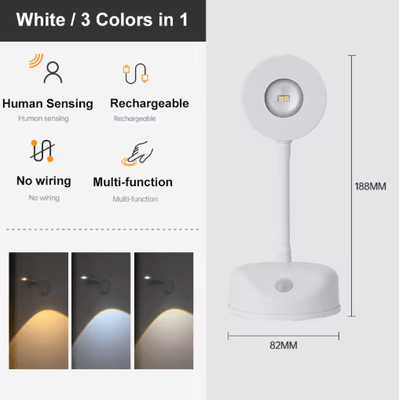
Inspire Picks USB Rechargeable Motion Sensor Wall Light Wireless Dimmable LED Spotlight For Pictures & Art white 1200mahHighlight your favorite spaces effortlessly with this smart motion sensor wall light. Designed for modern homes and art lovers, it automatically lights up when needed, adding both convenience and elegance. Its sleek, wireless design makes...55,65 $*Shipping: 0,00 $Secure redirect to the provider
-
The Dinosaur Book: Our World in Pictures (DK Our World in Pictures)Find out everything you need to know about dinosaurs, pterosaurs, marine reptiles, and prehistoric mammals with this picture-packed encyclopedia of curiosities. Come face-to-face with some of the most incredible creatures ever to exist in this incredible book of dinosaurs and other prehistoric life. With more than 1,000 extraordinary images and fascinating facts, kids aged 9-12 will love poring over the pages of Our World in Pictures: The Dinosaurs Book. This book brings to life all forms of prehistoric creatures through vivid illustrations and realistic digital reconstructions, showing their fearsome teeth, tails, legs and scales that enabled them to eat, move and defend themselves against predators. Celebrate your child's curiosity as they explore: - Striking and detailed diagrams, drawings, and illustrations on every page. - Covers all forms of prehistoric life, from the first primitive invertebrates to dazzling dinosaurs, and the earliest mammals. - Up-to-date, essential information about dinosaurs' evolution and extinction, and every aspect of dinosaur science. - Picture-heavy and text-light approach to introduce geological periods, evolution and extinction, and every aspect of dinosaur science. Young readers will love to find out about the latest scientific discoveries that have changed the way we see these fascinating prehistoric animals - from the discovery of feathered dinosaurs to analysing what has been found in their stomachs. Find all this and more in this dinosaur encyclopedia, featuring at-a-glance panels that provide a quick reference to all the stats, making it an ideal combination of colourful diagrams and informative text boxes. The easy-to-read text is accessible for kids aged 9+, yet can be enjoyed by the entire family, making this enthralling children's encyclopedia a beautiful and educational gift that can be passed down generations. Learn all about the world one picture at a time!7,95 £*Shipping: 2,99 £Secure redirect to the provider
-
Inspire Select Rechargeable Motion Sensor LED Spotlight Wireless Dimmable Wall Light For Art, Pictures & Indoor Lighting white 1200mahIlluminate your space effortlessly with this smart motion sensor LED spotlight designed for modern convenience and style. Perfect for art lovers and homeowners, this wireless wall light highlights paintings and dcor while saving energy. With...58,99 $*Shipping: 0,00 $Secure redirect to the provider
-
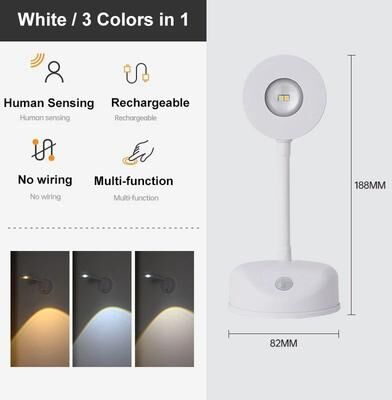
Inspire Picks Wireless Motion Sensor LED Wall Light USB Rechargeable Dimmable Spotlight For Paintings & Pictures whiteUpgrade your home with this motion sensor wall light that combines smart technology with elegant, cordless design. Featuring intelligent human sensing, this wireless LED spotlight automatically turns on when motion is detected, providing convenient...63,56 $*Shipping: 0,00 $Secure redirect to the provider


-
Is the centripetal force the same as the centripetal acceleration?
No, the centripetal force and centripetal acceleration are not the same. Centripetal force is the force that keeps an object moving in a circular path, directed towards the center of the circle. Centripetal acceleration, on the other hand, is the acceleration of an object moving in a circular path, directed towards the center of the circle. While they both play a role in circular motion, they are distinct concepts with different physical meanings. **
-
What is the difference between centripetal force, centripetal acceleration, and angular velocity?
Centripetal force is the force that keeps an object moving in a circular path towards the center of the circle. Centripetal acceleration is the acceleration of an object moving in a circular path, directed towards the center of the circle. Angular velocity, on the other hand, is the rate at which an object rotates around a fixed point, measured in radians per second. In summary, centripetal force is the force that keeps an object in circular motion, centripetal acceleration is the acceleration towards the center of the circle, and angular velocity is the rate of rotation around a fixed point. **
-
How do you calculate the centripetal force in a vertical circular motion?
To calculate the centripetal force in a vertical circular motion, you need to consider the forces acting on the object. The centripetal force is the net force directed towards the center of the circle that keeps the object moving in a circular path. In a vertical circular motion, the centripetal force is the sum of the gravitational force and the tension in the string or the normal force, depending on the situation. You can calculate the centripetal force using the formula Fc = mv^2/r, where m is the mass of the object, v is the velocity, and r is the radius of the circular path. **
-
Which bodies use centripetal force?
Centripetal force is used by various bodies in different scenarios. Some common examples include the Earth revolving around the Sun, a car turning around a curve, a ball spinning on a string, and a satellite orbiting a planet. In each of these cases, centripetal force is required to keep the body moving in a curved path rather than a straight line. **
Who invented the centripetal force?
The concept of centripetal force was first described by Isaac Newton in his book "Mathematical Principles of Natural Philosophy" in 1687. Newton's work laid the foundation for understanding the motion of objects in circular paths and the force required to keep them in that motion. While Newton is credited with the concept of centripetal force, it is important to note that the understanding of circular motion and the forces involved has evolved over time with contributions from many scientists and mathematicians. **
What is the centripetal acceleration?
Centripetal acceleration is the acceleration experienced by an object moving in a circular path. It is directed towards the center of the circle and its magnitude is given by the formula a = v^2/r, where v is the velocity of the object and r is the radius of the circle. This acceleration is necessary to keep an object moving in a circular path, as it constantly changes the direction of the object's velocity. **
Top-Angebote
Products related to Centripetal:
-
soundcore Nebula 100-Inch Outdoor Projector Screen Durable Setup for Backyard Cinema"100"" Big Screen for the Whole Family: Enjoy a truly cinematic experience at home or outdoors with a 100-inch screen—perfect for movie and game nights, and backyard gatherings. Quick, Easy Setup and Disassembly: Assemble and disassemble in less than..."169,00 $*Shipping: 0,00 $Secure redirect to the provider
-
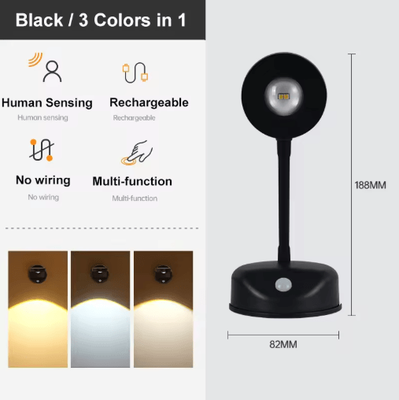
Inspire Picks Wireless Motion Sensor LED Wall Light USB Rechargeable Dimmable Spotlight For Paintings & Pictures blackUpgrade your home with this motion sensor wall light that combines smart technology with elegant, cordless design. Featuring intelligent human sensing, this wireless LED spotlight automatically turns on when motion is detected, providing convenient...62,51 $*Shipping: 0,00 $Secure redirect to the provider
-
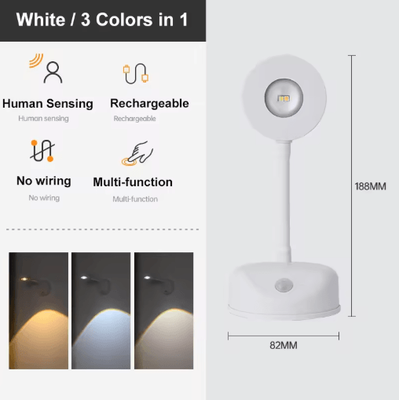
Inspire Picks USB Rechargeable Motion Sensor Wall Light Wireless Dimmable LED Spotlight For Pictures & Art white 1200mahHighlight your favorite spaces effortlessly with this smart motion sensor wall light. Designed for modern homes and art lovers, it automatically lights up when needed, adding both convenience and elegance. Its sleek, wireless design makes...55,65 $*Shipping: 0,00 $Secure redirect to the provider
-
The Dinosaur Book: Our World in Pictures (DK Our World in Pictures)Find out everything you need to know about dinosaurs, pterosaurs, marine reptiles, and prehistoric mammals with this picture-packed encyclopedia of curiosities. Come face-to-face with some of the most incredible creatures ever to exist in this incredible book of dinosaurs and other prehistoric life. With more than 1,000 extraordinary images and fascinating facts, kids aged 9-12 will love poring over the pages of Our World in Pictures: The Dinosaurs Book. This book brings to life all forms of prehistoric creatures through vivid illustrations and realistic digital reconstructions, showing their fearsome teeth, tails, legs and scales that enabled them to eat, move and defend themselves against predators. Celebrate your child's curiosity as they explore: - Striking and detailed diagrams, drawings, and illustrations on every page. - Covers all forms of prehistoric life, from the first primitive invertebrates to dazzling dinosaurs, and the earliest mammals. - Up-to-date, essential information about dinosaurs' evolution and extinction, and every aspect of dinosaur science. - Picture-heavy and text-light approach to introduce geological periods, evolution and extinction, and every aspect of dinosaur science. Young readers will love to find out about the latest scientific discoveries that have changed the way we see these fascinating prehistoric animals - from the discovery of feathered dinosaurs to analysing what has been found in their stomachs. Find all this and more in this dinosaur encyclopedia, featuring at-a-glance panels that provide a quick reference to all the stats, making it an ideal combination of colourful diagrams and informative text boxes. The easy-to-read text is accessible for kids aged 9+, yet can be enjoyed by the entire family, making this enthralling children's encyclopedia a beautiful and educational gift that can be passed down generations. Learn all about the world one picture at a time!7,95 £*Shipping: 2,99 £Secure redirect to the provider
-
How does a circular motion arise from the centripetal force?
A circular motion arises from the centripetal force because the centripetal force acts towards the center of the circular path. This force is necessary to keep an object moving in a circular path, as it continuously changes the direction of the object's velocity. Without the centripetal force, the object would move in a straight line tangent to the circle. The centripetal force can be provided by various means, such as tension in a string, gravitational force, or friction. **
-
What is the difference between centripetal force and centripetal acceleration?
Centripetal force is the force that keeps an object moving in a circular path, directed towards the center of the circle. It is responsible for changing the direction of the object's velocity. On the other hand, centripetal acceleration is the acceleration experienced by an object moving in a circular path, directed towards the center of the circle. It is caused by the centripetal force acting on the object. In summary, centripetal force is the force that causes centripetal acceleration in an object moving in a circular path. **
-
Is the centripetal force the same as the centripetal acceleration?
No, the centripetal force and centripetal acceleration are not the same. Centripetal force is the force that keeps an object moving in a circular path, directed towards the center of the circle. Centripetal acceleration, on the other hand, is the acceleration of an object moving in a circular path, directed towards the center of the circle. While they both play a role in circular motion, they are distinct concepts with different physical meanings. **
-
What is the difference between centripetal force, centripetal acceleration, and angular velocity?
Centripetal force is the force that keeps an object moving in a circular path towards the center of the circle. Centripetal acceleration is the acceleration of an object moving in a circular path, directed towards the center of the circle. Angular velocity, on the other hand, is the rate at which an object rotates around a fixed point, measured in radians per second. In summary, centripetal force is the force that keeps an object in circular motion, centripetal acceleration is the acceleration towards the center of the circle, and angular velocity is the rate of rotation around a fixed point. **
Similar search terms for Centripetal
-
Inspire Select Rechargeable Motion Sensor LED Spotlight Wireless Dimmable Wall Light For Art, Pictures & Indoor Lighting white 1200mahIlluminate your space effortlessly with this smart motion sensor LED spotlight designed for modern convenience and style. Perfect for art lovers and homeowners, this wireless wall light highlights paintings and dcor while saving energy. With...58,99 $*Shipping: 0,00 $Secure redirect to the provider
-
Inspire Picks Wireless Motion Sensor LED Wall Light USB Rechargeable Dimmable Spotlight For Paintings & Pictures whiteUpgrade your home with this motion sensor wall light that combines smart technology with elegant, cordless design. Featuring intelligent human sensing, this wireless LED spotlight automatically turns on when motion is detected, providing convenient...63,56 $*Shipping: 0,00 $Secure redirect to the provider
-
Inspire Picks USB Rechargeable Motion Sensor Wall Light Wireless Dimmable LED Spotlight For Pictures & Art white 2000mahHighlight your favorite spaces effortlessly with this smart motion sensor wall light. Designed for modern homes and art lovers, it automatically lights up when needed, adding both convenience and elegance. Its sleek, wireless design makes...66,92 $*Shipping: 0,00 $Secure redirect to the provider
-
Inspire Picks USB Rechargeable Motion Sensor Wall Light Wireless Dimmable LED Spotlight For Pictures & Art black 2000mahHighlight your favorite spaces effortlessly with this smart motion sensor wall light. Designed for modern homes and art lovers, it automatically lights up when needed, adding both convenience and elegance. Its sleek, wireless design makes...71,47 $*Shipping: 0,00 $Secure redirect to the provider
-
How do you calculate the centripetal force in a vertical circular motion?
To calculate the centripetal force in a vertical circular motion, you need to consider the forces acting on the object. The centripetal force is the net force directed towards the center of the circle that keeps the object moving in a circular path. In a vertical circular motion, the centripetal force is the sum of the gravitational force and the tension in the string or the normal force, depending on the situation. You can calculate the centripetal force using the formula Fc = mv^2/r, where m is the mass of the object, v is the velocity, and r is the radius of the circular path. **
-
Which bodies use centripetal force?
Centripetal force is used by various bodies in different scenarios. Some common examples include the Earth revolving around the Sun, a car turning around a curve, a ball spinning on a string, and a satellite orbiting a planet. In each of these cases, centripetal force is required to keep the body moving in a curved path rather than a straight line. **
-
Who invented the centripetal force?
The concept of centripetal force was first described by Isaac Newton in his book "Mathematical Principles of Natural Philosophy" in 1687. Newton's work laid the foundation for understanding the motion of objects in circular paths and the force required to keep them in that motion. While Newton is credited with the concept of centripetal force, it is important to note that the understanding of circular motion and the forces involved has evolved over time with contributions from many scientists and mathematicians. **
-
What is the centripetal acceleration?
Centripetal acceleration is the acceleration experienced by an object moving in a circular path. It is directed towards the center of the circle and its magnitude is given by the formula a = v^2/r, where v is the velocity of the object and r is the radius of the circle. This acceleration is necessary to keep an object moving in a circular path, as it constantly changes the direction of the object's velocity. **
* All prices are inclusive of VAT and, if applicable, plus shipping costs. The offer information is based on the details provided by the respective shop and is updated through automated processes. Real-time updates do not occur, so deviations can occur in individual cases. ** Note: Parts of this content were created by AI.